When life gives you lemon rinds, make limonene. A common source of D-Limonene is citrus rind. The terpenes are extracted, and then D-Limonene is purified from the other terpenes by fractional distillation.
D-Limonene is used as a flavoring agent in food products. It is also a precursor for the chemical carvone. It is sometimes used as a "renewable" solvent in cleaning products.
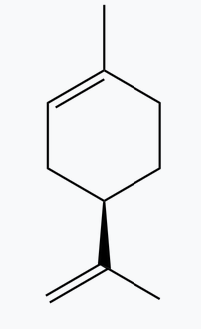
One application for B/R packed column distillation systems is the purification of citrus terpenes. The target compound for this customer is D-Limonene.
What is in the extract
The extract contains the following compounds in varying concentrations. They are listed by boiling point, lowest at the top and highest at the bottom.
- Ethyl butyrate
- Alpha-pinene
- Sabinene
- Myrcene
- Octanal
- D-Limonene
- Linalool
- Citronellal
- Alpha-terpineol
- Decanal
- Neral
- Valencene
- Delta-cadinene
- Nootkatone
The distillation
Fractional distillation separates components by boiling point. A 30 theoretical plate packed column was used with a 22 liter boiling flask. The distillation was performed under vacuum.
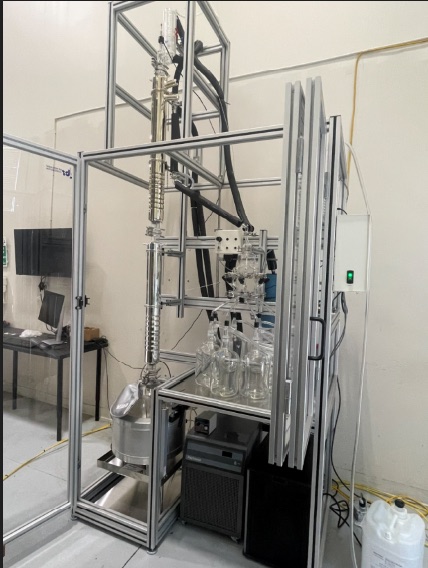
The starting material contained 55% limonene. The first fraction was distilled off and collected. It contains all the compounds with boiling points lower than D-Limonene.
A second fraction was distilled off and collected. It contained the target compound, D-Limonene.
The compounds that boil higher than D-Limonene were left behind in the boiling flask.
The final analysis of the purified D-Limonene was 99.2%.
System sizing
Citrus terpene work scales with the charge. Smaller research batches run on micro and mini systems. Multi-liter purification like this job runs on the lab scale 9600, and larger volumes move to pilot scale. See the full fractional distillation family for how they fit together.