HPLC Solvent Recycling

Reduction of HPLC Waste Solvent Using Spinning Band Distillation

HPLCs use solvents or mixtures of solvents as the mobile phase. Once used, the disposal of these solvents presents an ever-increasing problem. Not only is there the expense of disposal, but also the cost of managing and storing the waste. Spinning band distillation can be used in a number of ways to reduce the amount of waste solvent from HPLCs.

HPLC Solvent Recycling
Fig. 18HPLC Solvent Recycling
01

Get the Water Out!

Most HPLC waste contains large amounts of water, up to 90%. So for every liter of solvent purchased, there is up to 10 liters of waste generated!

Removing the majority of water from these wastes is easily accomplished using spinning band distillation. Solvents used in HPLCs have lower boiling points than water. When distilled, these solvents boil first. The water is left behind in the boiling flask. This water is suitable for drain disposal.

Water removal is the best and fastest way to reduce HPLC waste disposal.

Acetonitrile Example

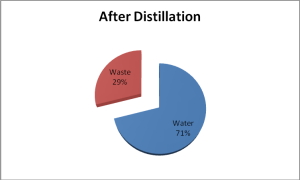
A typical HPLC waste stream of 75% water / 25% acetonitrile:

  • Starting waste: 10 liters (7.5L water + 2.5L acetonitrile)
  • Spinning band yields: ~2.9L acetonitrile/water azeotrope (87% ACN / 13% water)
  • Remaining water: 7.1L suitable for drain disposal
  • Result: Instead of 10L waste hauled away, only 2.9L. Savings of 71%.
02

About the Recovered Acetonitrile

The distilled acetonitrile is normally mixed with 13% water due to the azeotrope that forms between acetonitrile and water.

This approach focuses on cutting the volume of waste that must be stored and hauled, not on producing dry, 100% pure acetonitrile. For other high-purity recovery applications, see high purity solvent recycling and GPC solvent recycling.

9600 Solvent Recycler Specifications

  • Column Type: Spinning Band
  • Throughput: 2-3 liters per hour
  • Batch Sizes: 5, 12, 22, and 50 liters
  • Contact Surfaces: Glass and Teflon
03
Questions

HPLC Solvent Recycling FAQ

How much waste volume can be reduced?
In the documented acetonitrile example (75% water / 25% acetonitrile, 10 L starting waste), spinning band distillation yields about 2.9 L of acetonitrile/water azeotrope and leaves 7.1 L of water suitable for drain disposal, a 71% reduction in waste hauled away.
Is recovered acetonitrile pure and dry?
No. The distilled acetonitrile is normally mixed with about 13% water because of the acetonitrile-water azeotrope. The main benefit is removing bulk water so far less organic waste must be stored and disposed of.
Quotation

Request a quotation

Tell us the sample, charge size, and what you need the system to do. We build custom solutions for any problem.