Q: If I am recycling more than one solvent in a recycler, how do I avoid cross contamination between the solvents?
After making your solvents nice and clean in the recycler, you don't want to contaminate them with another solvent.
There are two types of recyclers to consider, single and multiple path recyclers.
Single path recyclers
Single path recyclers use the same boiler, distillation column, condenser and collection valve for all the solvents being recycled. For a single path recycler you will need to perform a short cleaning cycle in between solvent types.
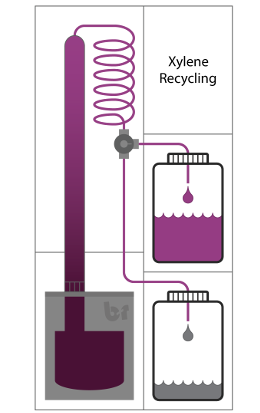
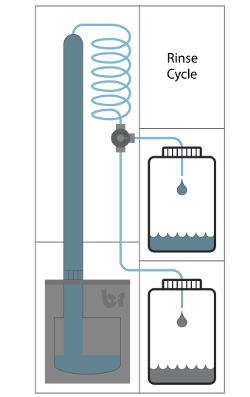
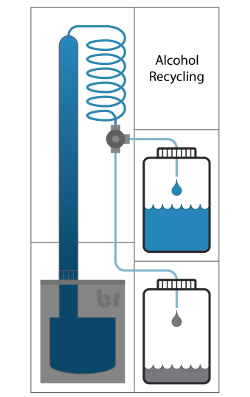
For instance, if you have recycled xylene and now want to recycle alcohol, you need to remove the trace xylene from the recycler. The easiest way to clean the system is to distill a small amount of waste alcohol to rinse any residual xylene.
Pluses:
- Clean cycles are not a lot of work.
Minuses:
- Some solvent waste
- It wastes available recycling time
Multiple path recyclers
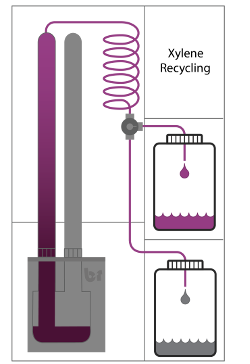
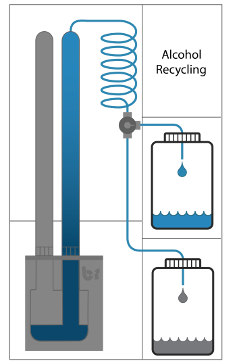
Multiple path recyclers have separate distillation paths for each solvent. Each solvent has its own boiler, distillation column, condenser and receivers. Cross contamination is impossible and cleaning between solvent types is unnecessary.
Most multiple path recycler use removable boilers. When you switch solvents you will also switch boilers. Switching boilers isn't a big deal since it only takes about 2 minutes.